
If you’ve ever clicked a button on a website, filled out a form, or scrolled through a smooth interface, you’ve experienced frontend technology.
Frontend development is where creativity meets logic. It’s the part of web development users actually see and interact with.
This guide will help you understand what frontend technology is, the best tools available today, and how you can master it step by step.
What is Frontend Technology?
Frontend technology refers to everything users interact with directly in a web application.
It includes:
- Layout and structure
- Design and colors
- Buttons, forms, and animations
- User interactions
In simple terms:
👉 Frontend = What users see and use
Core Frontend Technologies (The Foundation)
Every frontend developer must know these:
1. HTML (Structure)
Defines the structure of a webpage.
👉 Learn: https://www.w3schools.com/html/
2. CSS (Design)
Controls styling like colors, layout, and responsiveness.
👉 Learn: https://www.w3schools.com/css/
3. JavaScript (Logic)
Adds interactivity and dynamic behavior.
👉 Learn: https://developer.mozilla.org/en-US/docs/Web/JavaScript
These three are non-negotiable. Everything else builds on top of them.
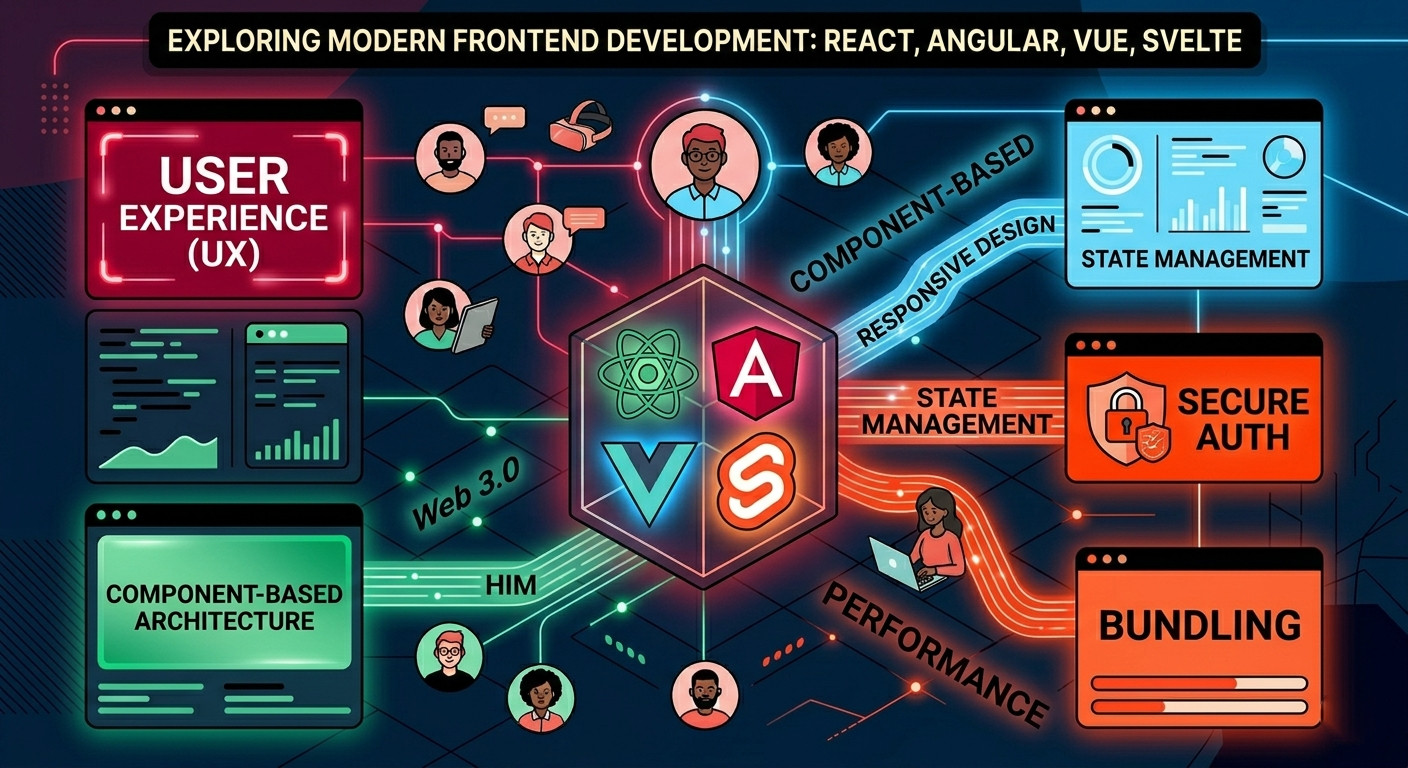
Modern Frontend Options (What You Can Choose)
Once you know the basics, you move to frameworks and tools.
1. React (Most Popular)
- Huge community
- Used by big companies
- Flexible and powerful
2. Next.js (Production Ready)
- Built on React
- Great for SEO
- Fast performance
3. Vue.js (Beginner Friendly)
- Easy to learn
- Clean syntax
4. Angular (Enterprise Level)
- Full framework
- Used in large applications
5. Styling Tools
Modern styling tools include:
- Tailwind CSS → https://tailwindcss.com
- Bootstrap → https://getbootstrap.com
Which Frontend Technology is Better?
This is the most common question.
The honest answer:
👉 There is no single “best” technology.
But here’s a practical recommendation:
- Beginner → Start with HTML, CSS, JavaScript
- Intermediate → Learn React
- Advanced → Learn Next.js + performance optimization
Why React + Next.js?
- High demand in jobs
- Strong ecosystem
- Real-world usage
How to Master Frontend Development
Most people get stuck because they only watch tutorials.
Here’s the right way:
Step 1: Build Strong Fundamentals
Don’t rush frameworks.
Focus on:
- clean HTML
- responsive CSS
- solid JavaScript
Step 2: Build Small Projects
Start simple:
- Landing page
- Portfolio
- Blog layout
Then improve step by step.
Step 3: Learn a Framework
Pick one (preferably React).
Understand:
- components
- state management
- API calls
Step 4: Work on Real Projects
Build:
- Dashboard
- E-commerce UI
- Chat interface
Step 5: Optimize and Improve
Learn:
- performance optimization
- accessibility
- SEO basics
Common Mistakes to Avoid
- Jumping into frameworks too early
- Copy-pasting code
- Not building projects
- Switching technologies too often
Final Thoughts
Frontend development is one of the most exciting career paths today.
It gives you:
- creativity
- high demand
- freelance opportunities
- remote jobs
But success depends on one thing:
👉 Consistency
Your Action Plan
Start today:
- Learn HTML + CSS
- Build a simple page
- Add JavaScript
- Learn React
- Build real projects
Repeat the cycle.
Frontend is not hard if you follow the right path.
Keep learning, keep building, and grow your skills with CodeIlearn.com.