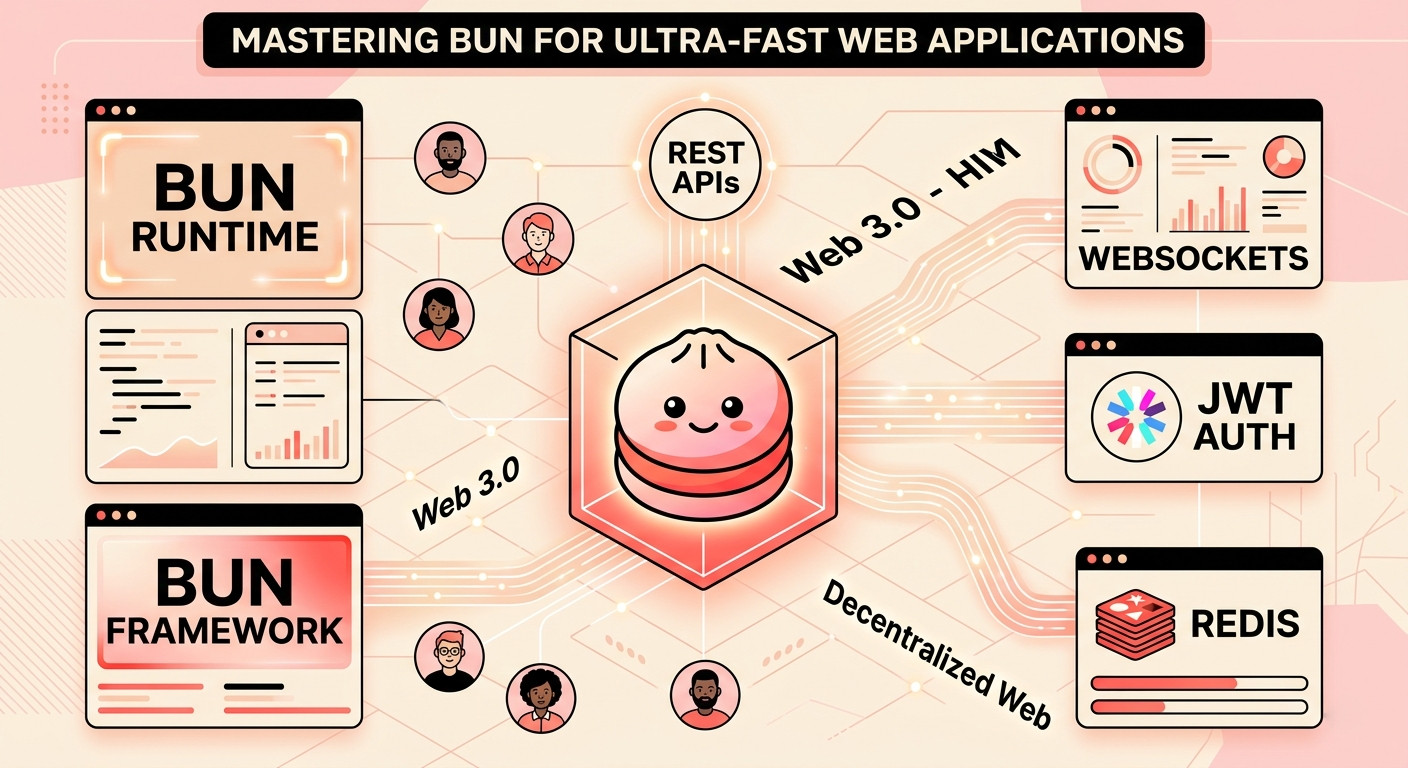

JavaScript keeps evolving, and one of the most talked-about tools right now is Bun. If you’re exploring backend development or looking beyond Node.js, Bun is something you should understand.
This guide breaks it down clearly so you can decide whether it’s worth learning.
What is Bun?
Bun is a modern JavaScript runtime, package manager and test runner designed as a drop-in replacement for Node.js, but designed to be faster and more efficient. Bun uses Safari’s JavaScriptCore as its JavaScript engine, unlike Node.js and Deno, which run on the V8 engine used by the Chromium project. Created by Jarred Sumner and still maturing compared to Node.js
Programming languages used: JavaScript, TypeScript, Zig, C, C++
👉 Official site:
https://bun.sh
It allows you to:
- Run JavaScript and TypeScript
- Build backend servers
- Manage packages
- Run scripts
The key difference:
👉 Bun combines multiple tools into one single runtime.
Why Should You Learn Bun?
1. Speed Matters
Bun is built using the JavaScriptCore engine (used by Safari), and it’s designed for performance.
In many cases:
👉 Bun is faster than Node.js
2. All-in-One Tool
With Bun, you don’t need multiple tools.
It replaces:
- Node.js (runtime)
- npm/yarn (package manager)
- bundlers (like webpack)
Everything is built-in.
3. Developer Experience
Bun focuses on simplicity:
- Fast install times
- Simple commands
- Less configuration
4. Future-Oriented Technology
Bun is gaining attention quickly and is likely to become important in modern development workflows.
Advantages of Bun
✔ Extremely fast performance
✔ Built-in package manager
✔ Native TypeScript support
✔ Less setup and configuration
✔ Modern architecture
Disadvantages of Bun
❌ Still relatively new
❌ Smaller community compared to Node.js
❌ Some libraries may not be fully compatible
❌ Fewer learning resources
Bun vs Node.js (Key Differences)
| Feature | Bun | Node.js |
|---|---|---|
| Speed | Very fast | Fast |
| Maturity | New | Mature |
| Ecosystem | Growing | Huge |
| Built-in Tools | Yes (all-in-one) | No (separate tools) |
| Compatibility | Improving | Very stable |
Simple Explanation:
- Node.js = Stable, widely used, industry standard
- Bun = Fast, modern, future-focused
Future Job Opportunities
Right now, most jobs still use Node.js. But Bun is growing.
In the near future, you may see roles like:
- Backend Developer (Bun + Node)
- Full Stack Developer (modern stack)
- Performance-focused Engineer
👉 Early adopters of Bun may have an advantage later.
Projects You Can Build with Bun
Beginner
- Simple API server
- Static website server
Intermediate
- REST API with database
- Authentication system
Advanced
- Real-time apps
- Microservices
- High-performance APIs
Should You Learn Bun in 2026?
Yes, but with a strategy:
👉 First learn Node.js (industry standard)
👉 Then explore Bun for performance and modern workflows
This gives you:
- job-ready skills
- future-ready knowledge
Final Thoughts
Bun is not here to replace Node.js overnight, but it is definitely pushing the ecosystem forward.
If you:
- care about performance
- want modern tools
- like experimenting with new tech
Bun is worth learning.
Your Next Step
- Install Bun
- Run your first script
- Compare it with Node.js
- Build a small project
CodeIlearn.com will keep bringing you the latest technologies so you stay ahead in your development journey.